How Acoustic Design Protects Restaurant Revenue

Industrial-chic restaurant design—featuring polished concrete floors, exposed brick walls, and hardwood tabletops—creates a striking visual identity. However, without acoustic planning, these hard surfaces transform dining rooms into reverberation chambers

When sound reflects continuously off hard surfaces, venues fall into the Lombard Effect: a psychological phenomenon where patrons unconsciously speak louder to be heard over background noise. As every table raises its voice, ambient noise levels rapidly escalate to 75–85 dB—the acoustic equivalent of heavy city traffic.

For hospitality owners, poor acoustics directly impair repeat business and bottom-line revenue.

1. The Financial Impact of Overly Noisy Dining Rooms

Acoustic discomfort directly shapes customer behavior, length of stay, and repeat visits:

  • Customer Loss: Over 70% of diners report actively avoiding overly noisy venues.
  • Revenue Decline: For a dining room generating $20,000 per week, a 10% drop in repeat customers due to excessive noise equates to over $100,000 in lost annual revenue.
  • Damaged Online Reviews: Noise level is consistently ranked among the top complaints in online hospitality reviews, directly lowering overall rating scores and discouraging prospective guests.

2. Acoustic Targets for Hospitality Spaces​

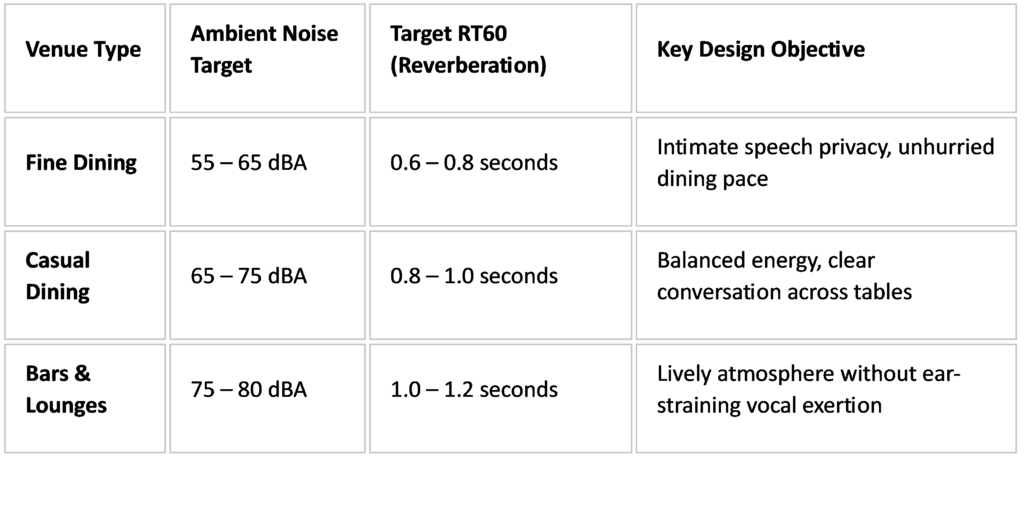
To control the Lombard Effect, dining environments require specific Reverberation Time (RT60) and ambient sound benchmarks:

3. High-Performance Solutions for Dining Spaces

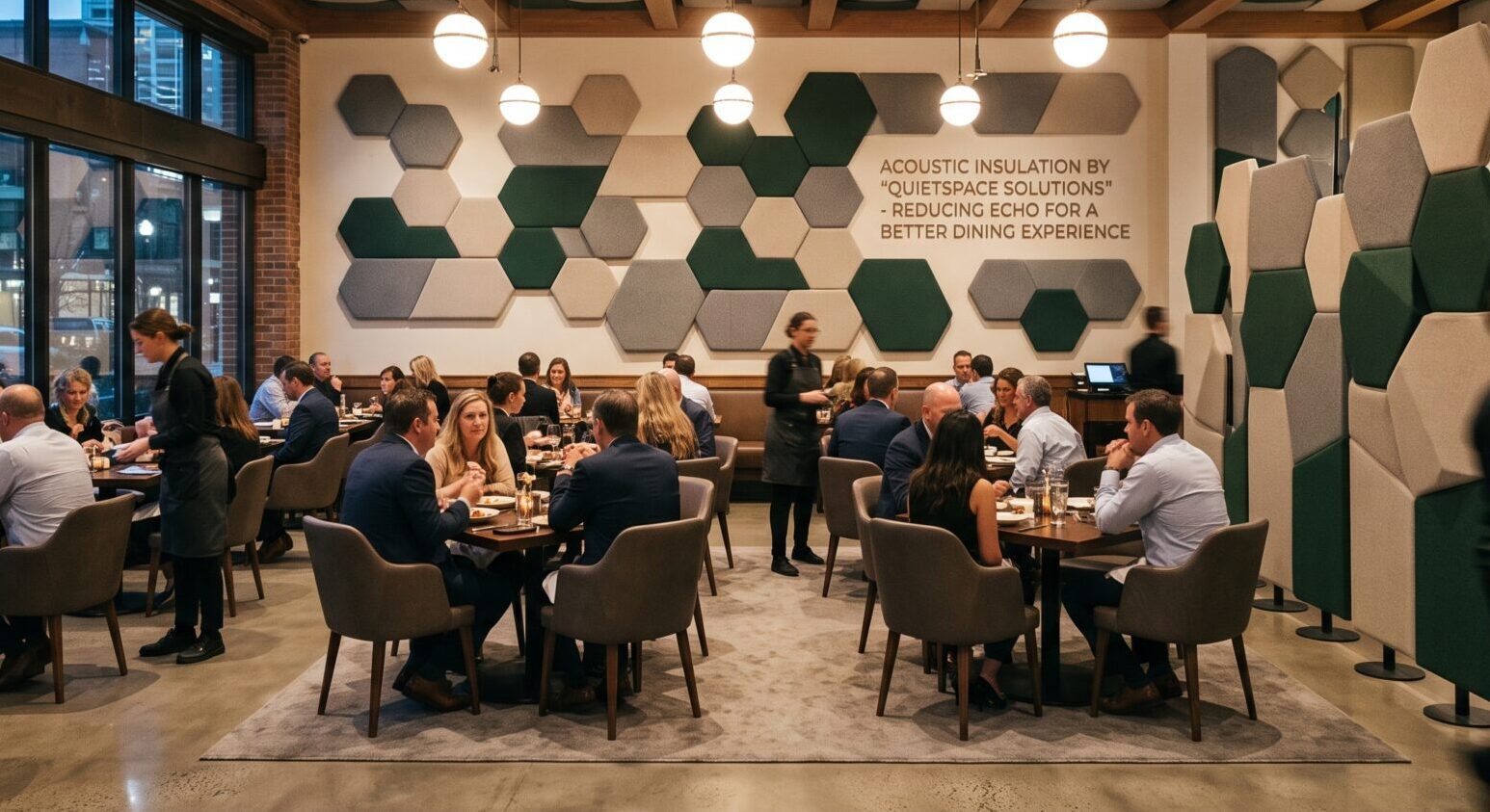
Controlling sound reflections does not require sacrificing architectural aesthetics. Modern, upcycled PET felt solutions seamlessly integrate sound absorption directly into interior design:

  • Overhead Ceiling Baffles & Clouds: Installing suspended baffles (such as RT Acoustic Rhythm Baffles) intercepts sound waves at the ceiling plane before they reflect back down to the dining floor.
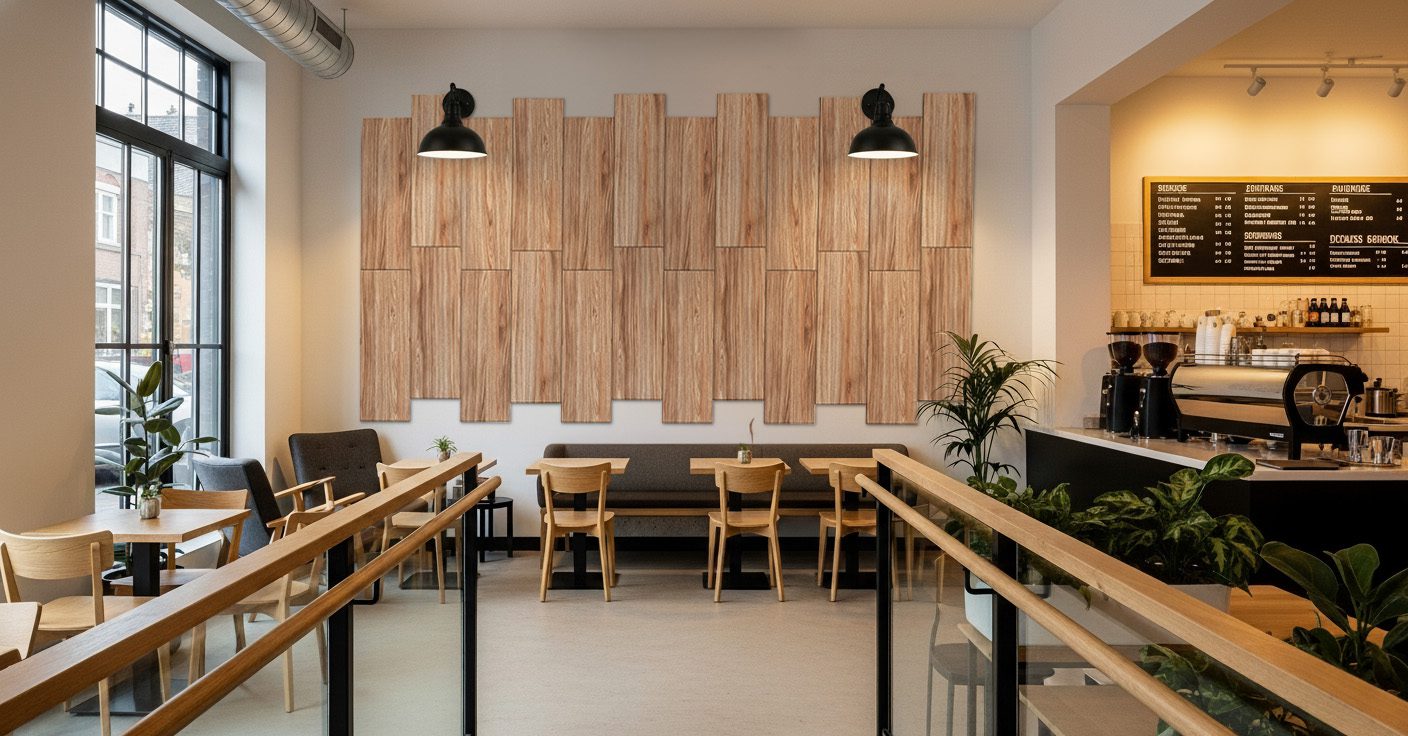
  • V-Groove Architectural Wall Panels: Precision-cut wall treatments (such as RT Acoustic SOLO and Red Dot Award-winning DUET®) provide high sound absorption (NRC ratings) while adding visual texture.
  • Under-Table Hidden Absorption: Mounting high-density melamine foam or PET panels on the undersides of timber tables traps mid-to-high speech frequencies directly at the source.
  • Sustainable & Safe Materials: RT Acoustic solutions utilize 60%+ upcycled post-consumer recycled PET bottles, emit zero VOCs, and meet ASTM E84 Class A and EN 13501-1 fire safety standards required for commercial public assembly.

Acoustic design in hospitality is an essential revenue driver. By taming the Lombard Effect, restaurants create comfortable environments where guests stay longer, spend more, and return consistently.